
Subaru Impreza vs Honda Civic: A Technical Comparison Focused on Engineering Choices
Evaluate the Subaru Impreza against the Honda Civic with technical explanations, efficiency numbers, and ownership factors to make a decision based on engineering, not marketing.
The Subaru Impreza and the Honda Civic compete in the same compact segment in the U.S., but they are designed around very different engineering priorities.
While both are reliable and aimed at long-term ownership, their drivetrain architecture, engine layout, weight distribution, and efficiency targets create measurable differences.
Learn auto financing options, compare structures, and avoid costly financing mistakes before signing any vehicle contract in the U.S. market.
See the Engine Architecture and Drivetrain Layout – Subaru Impreza vs Civic 🚗
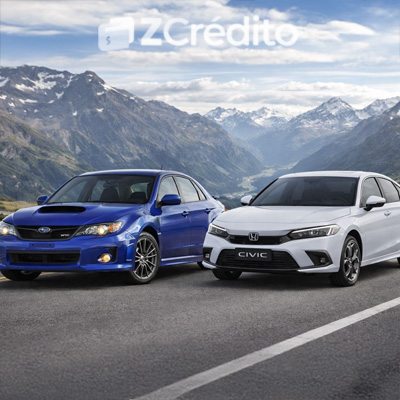
The Subaru Impreza uses a 2.0-liter horizontally opposed boxer engine mounted longitudinally and paired with symmetrical all-wheel drive.
The Honda Civic uses a 2.0-liter inline four-cylinder engine mounted transversely, driving the front wheels.
From an engineering perspective, the Impreza prioritizes balance and traction, while the Civic prioritizes efficiency and reduced mechanical loss.

Core Powertrain Specifications 📊
| Specification | Subaru Impreza | Honda Civic |
| Engine | 2.0L H4 Boxer | 2.0L Inline-4 |
| Horsepower | 152 hp | 158 hp |
| Torque | 145 lb-ft | 138 lb-ft |
| Drivetrain | AWD (standard) | FWD |
| Curb weight (approx.) | 3,100 lbs | 2,900 lbs |
Although the Civic produces slightly more horsepower, the Impreza’s drivetrain changes how that power is used.
Power Delivery and Acceleration Behavior for the Subaru Impreza vs Civic 🚦
On paper, the Honda Civic accelerates slightly faster, reaching 0–60 mph in approximately 8.5 seconds, while the Subaru Impreza takes closer to 8.9 seconds.
This difference is primarily due to weight and drivetrain losses from AWD.
In practice, the Impreza compensates with better traction at launch, especially on wet pavement or uneven surfaces.
Power delivery in the Impreza feels smoother and more controlled, while the Civic feels quicker and lighter during low-speed urban driving.
This means the Civic favors responsiveness, while the Impreza favors predictability.
View Traction, Stability, and Low-Grip Performance 🛞
Traction is where the Subaru Impreza establishes its strongest technical advantage.
Its all-wheel-drive system distributes torque continuously to all four wheels, improving grip before wheel slip occurs.
The Civic relies on electronic traction control to manage wheel spin after it begins, which works well on dry roads but is inherently reactive.
In rain, snow, or steep inclines, the difference becomes clear:
- The Subaru Impreza maintains forward momentum with minimal wheel spin
- The Civic may reduce power aggressively to regain traction
- Hill starts and slick intersections favor the Impreza
- Emergency maneuvers feel more stable in the Impreza
This advantage is mechanical, not software-dependent.
Chassis Design, Suspension, and Ride Control ⚙️
Both vehicles use a MacPherson strut front suspension, but their rear suspension designs differ.
The Subaru Impreza uses a double wishbone rear setup focused on stability and wheel control under load, while the Civic uses a multi-link rear suspension tuned for agility and ride comfort.
Because of its AWD system and boxer engine layout, the Impreza has a lower center of gravity but carries more mass. This results in:
- Better composure on uneven roads
- Less body roll in long, sweeping corners
- A calmer ride at highway speeds
The Civic, being lighter, feels:
- More agile in tight turns
- Easier to maneuver in city traffic
- Slightly more responsive to steering inputs
Fuel Efficiency and Energy Loss – Subaru Impreza vs Civic 🚘
Fuel efficiency is a clear technical advantage for the Honda Civic. Without AWD, it experiences fewer drivetrain losses and carries less weight.
EPA combined ratings show:
- Honda Civic: ~35 mpg combined
- Subaru Impreza: ~29 mpg combined
On highways, the gap widens further, with the Civic approaching 40 mpg, while the Impreza remains closer to 33 mpg.
This difference is not marginal over time. For high-mileage drivers, fuel cost savings strongly favor the Civic.
Safety Philosophy and Mechanical Prevention 🛡️
Both vehicles include modern driver-assistance systems such as automatic emergency braking, lane support, and adaptive cruise control. The difference lies in how safety is achieved.
The Subaru Impreza integrates safety mechanically through AWD stability and balanced weight distribution, reducing the likelihood of loss of control.
The Civic relies more heavily on electronic systems to intervene once instability is detected. In low-grip conditions, the Impreza’s approach often feels more natural and confidence-inspiring.
Learn Interior Space and Practical Measurements 📐
Interior space differences are modest but measurable.
| Measurement | Subaru Impreza | Honda Civic |
| Passenger volume | ~100 cu ft | ~99 cu ft |
| Cargo (sedan) | ~12.3 cu ft | ~14.8 cu ft |
| Cargo (hatchback) | ~20.8 cu ft | ~24.5 cu ft |
| Wheelbase | 105.1 in | 107.7 in |
The Civic offers more rear legroom and cargo capacity, while the Impreza prioritizes balanced cabin proportions.
Discover how auto financing online can reduce your monthly payments, streamline approvals, and help you compare with total transparency.
Ownership Costs and Long-Term Logic 🔧
From an ownership perspective, the Civic generally costs less to run due to:
- Lower fuel consumption
- Simpler drivetrain
- Wider parts availability
The Subaru Impreza may incur slightly higher fuel and maintenance costs but offsets this in regions where AWD vehicles retain higher resale value.
In snow-belt states, the Impreza often depreciates more slowly than FWD competitors.
Which Driver Should Choose Between Subaru Impreza vs Civic 🧠
The Subaru Impreza is technically better suited for drivers who:
- Face frequent rain, snow, or uneven terrain
- Prioritize traction and stability over efficiency
- Drive in rural or mountainous areas
- Value predictable handling in poor conditions
The Honda Civic better serves drivers who:
- Drive mostly in urban or highway environments
- Prioritize fuel economy and low operating costs
- Live in mild climates
- Prefer lighter, more responsive handling
Engineering-Driven Decision, Not Spec-Sheet Bias ✅
When evaluated with technical reasoning instead of raw numbers alone, the choice between the Subaru Impreza and the Honda Civic becomes clear.
The Impreza trades efficiency for mechanical stability and traction, while the Civic trades traction for lower mass, better efficiency, and reduced complexity.
Neither approach is universally superior. The correct choice depends on climate, terrain, mileage, and driving priorities.
Understanding these engineering trade-offs leads to a better decision than focusing on horsepower or marketing claims.
FAQ ❓
- Is the Subaru Impreza mechanically more complex than the Civic?
- Yes, due to its AWD system and boxer engine layout.
- Which model is more fuel-efficient in daily driving?
- The Honda Civic delivers better fuel economy.
- Does AWD make a real difference outside snow?
- Yes, especially in rain, uneven pavement, and emergency maneuvers.
- Are both cars reliable long-term?
- Yes, both Subaru and Honda have strong reliability records.
- Which car is better for mixed weather conditions?
- The Subaru Impreza performs better in low-traction environments.
