
Master Realism and Speed With the Most Advanced Games to Play Car Racing in 2025
Explore the most advanced games to play car racing, analyze engine physics depth, telemetry systems, and hardware compatibility, and select the ultimate racing experience.
In 2025, racing games are complex physics-driven ecosystems powered by advanced simulation engines, laser-scanned circuits and ultra-high refresh-rate rendering pipelines.
Serious about racing performance in 2025? Compare physics engines, force feedback torque ratings, frame-rate optimization, and tire simulation models before choosing your next title.
Discover games for two players that match your play style, comparing cooperation, competition, and shared gameplay depth.
Physics Engines Powering the Most Advanced Games to Play Car Racing 🧠
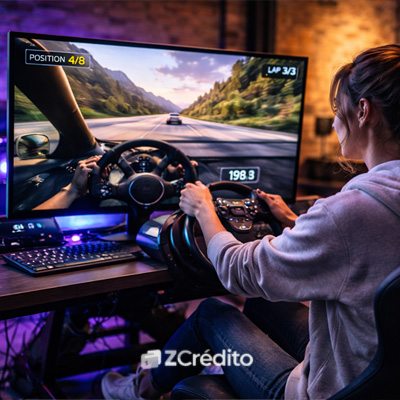
Modern simulation platforms calculate tire grip based on dynamic temperature, pressure, surface rubbering, and slip angle.
Advanced engines simulate:
- Longitudinal and lateral load transfer
- Tire carcass flex and heat cycles
- Brake fade under repeated stress
- Aerodynamic downforce at variable speeds
- Suspension compression and rebound behavior
Physics Comparison Across Leading Racing Titles 📊
| Title | Physics Tick Rate | Damage Modeling |
| Assetto Corsa Competizione | ~400 Hz | Mechanical + Aero |
| iRacing | ~360+ Hz | Structural + Suspension |
| rFactor 2 | ~400–1000 Hz | Highly Detailed |
| Forza Motorsport (New Gen) | ~360 Hz | Moderate |
Force Feedback and Steering Hardware Integration 🎮
For serious sim racers, force feedback (FFB) quality determines immersion.
Modern racing titles output detailed steering data including curb vibration, understeer resistance, braking oscillation, and rear traction loss.
High-end direct-drive wheel bases now deliver 10–25 Nm of torque, replicating authentic steering rack resistance.
The best games to play car racing provide highly tunable FFB profiles, allowing players to adjust:
- Steering weight scaling
- Damper and friction settings
- Road surface texture intensity
- ABS and traction control feedback signals
Titles optimized for direct-drive hardware provide smoother torque curves and reduced signal clipping, significantly enhancing competitive precision.
Graphics Pipelines and Rendering Games to Play Car Racing Performance 📈
Modern games to play car racing leverage advanced rendering technologies such as ray tracing, volumetric lighting, and dynamic weather particle systems.
Frame-rate stability is critical for competitive gameplay.
Technical rendering features include:
- Real-time global illumination
- Dynamic weather reflections on track surfaces
- 120–144 Hz support on PC
- Variable Refresh Rate (VRR) compatibility
- Ultra-wide and triple-monitor support
On PC, achieving stable 120 FPS at 1440p often requires GPUs such as RTX 3060 Ti or RX 6700 XT or higher.
Console optimization ensures consistent 4K 60 FPS performance on PS5 and Xbox Series X for leading games to play car racing.
Performance Benchmarks by Platform 📊
| Platform | Resolution Target | Frame Rate Target |
| High-End PC | 1440p–4K | 120–144 FPS |
| Mid-Range PC | 1080p–1440p | 60–100 FPS |
| PlayStation 5 | 4K | 60 FPS |
| Xbox Series X | 4K | 60 FPS |
Stable frame pacing enhances reaction time, especially in competitive games to play car racing where milliseconds matter.
Telemetry Systems and Data Analytics in Simulation Titles 📡
Advanced racing games now integrate real-time telemetry systems similar to professional motorsport.
Players can analyze lap data, throttle traces, brake pressure, steering angle, tire temperatures, and suspension travel.
Simulation-focused games to play car racing often support third-party telemetry apps such as:
- Motec i2 Pro integration
- SimHub dashboards
- Real-time delta time overlays
- Live fuel consumption modeling
This data-driven approach enables players to refine braking zones, optimize racing lines, and adjust tire pressures for peak performance.
Drivetrain and Vehicle Modeling Depth 🚗
Modern racing titles simulate multiple drivetrain configurations including front-wheel drive, rear-wheel drive, and all-wheel drive systems with distinct torque behaviors.
Technical vehicle modeling includes:
- Turbo lag simulation
- Gear ratio customization
- Differential locking adjustments
- Brake bias fine-tuning
- Anti-roll bar stiffness control
Competitive Games to Play Car Racing Multiplayer Infrastructure 🌐
The strongest games to play car racing now integrate ranked matchmaking algorithms based on skill rating, safety rating, and incident tracking systems.
These systems maintain competitive integrity and reduce chaotic lobbies. Dedicated server infrastructure ensures low-latency racing environments.
Advanced netcode synchronizes vehicle positions accurately to minimize desynchronization at high speeds exceeding 200 mph in-game.
Esports integration continues expanding, with structured leagues replicating real-world motorsport formats including qualifying sessions, practice rounds, and endurance races.
VR Integration and Immersive Racing Simulation 🕶️
Virtual reality support elevates immersion within elite games to play car racing. VR headsets such as Meta Quest (PC-linked) and Valve Index allow full cockpit depth perception.
Technical VR considerations include:
- 90–120 Hz headset refresh rate
- Stable frame pacing to avoid motion sickness
- High GPU headroom for consistent rendering
- Realistic cockpit scale calibration
When combined with direct-drive wheels and load-cell pedals, VR racing approaches near-professional simulator realism.
Want to play without paying? Explore the most popular free online games PC and jump into fun with just one click.
Investment Considerations for Technical Racing Setups 💰
Entering high-end simulation racing requires evaluating hardware cost alongside software investment. A competitive setup may include:
- Direct-drive wheel base: $600–$1,500
- Load-cell pedal set: $300–$800
- Racing cockpit frame: $400–$1,200
- Triple-monitor mount: $300–$600
The Technical Future of Games to Play Car Racing 🚀
Artificial intelligence is increasingly integrated into opponent behavior modeling.
AI now adapts to player skill level dynamically, adjusting braking aggression and overtaking strategies in real time.
Machine-learning-based tire simulation and predictive grip modeling are under development, potentially increasing realism even further.
Why Technically Advanced Games to Play Car Racing Define Modern Simulation 🏁
The evolution of games to play car racing in 2025 demonstrates how gaming technology now mirrors professional motorsport simulation.
With high-frequency physics calculations, advanced tire thermodynamics, detailed telemetry integration, and esports-level infrastructure, modern racing titles offer unparalleled depth.
For players seeking authentic motorsport replication, investing in technically sophisticated platforms ensures long-term engagement and skill development.
Whether competing in ranked online championships or refining lap times through telemetry analysis, racing games now provide a data-rich and immersive ecosystem.
Selecting the right title depends on how deeply you wish to engage with simulation physics, hardware integration, and competitive systems.
FAQ ❓
- Which racing games offer the most advanced physics engines in 2025?
- Assetto Corsa Competizione, rFactor 2, and iRacing are widely regarded as having the most detailed simulation physics.
- What does physics tick rate mean in racing games?
- It refers to how frequently the game updates physics calculations per second, directly influencing realism and responsiveness.
- Is a direct-drive wheel necessary for competitive sim racing?
- While not mandatory, direct-drive wheels provide stronger and more accurate force feedback for precision control.
- Do modern racing games support real telemetry software?
- Yes, many simulation titles integrate with third-party telemetry tools for advanced performance analysis.
- Can racing games run effectively at 120 FPS on PC?
- With appropriate hardware, many modern titles support high-refresh-rate gameplay for smoother performance.
