
Access Car Financing 0 Down and Get a Vehicle Without an Initial Payment
Understand how car financing 0 down interacts with income stability, lender behavior, and vehicle selection, helping you structure a deal that aligns with real-life budgeting needs.
Car financing 0 down has become a widely adopted option across the United States as buyers search for flexibility instead of heavy upfront commitments.
Rather than concentrating resources in a down payment, this model allows households to distribute costs more evenly over time.
Analyze how the Subaru Impreza combines standard AWD, balanced engineering, and predictable fuel efficiency.
How Car Financing 0 Down Is Evaluated by Lenders 🚗

Lenders view 0 down as a higher-exposure structure during the early months of ownership. To compensate, they apply stricter evaluation across income, vehicle value, and loan structure.
Interest rates are typically adjusted upward to reflect early depreciation, while loan terms may be extended to maintain affordable payments.
Automaker-backed finance programs frequently expand 0 down availability during sales events or inventory cycles, often replacing rebates with financing incentives.
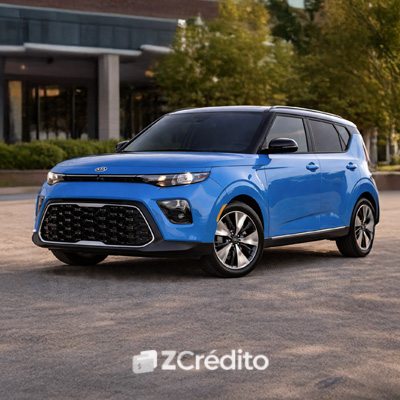
Financial Profiles That Align Well With Car Financing 0 Down 🚘
Not all borrowers experience the same benefits from 0 down. Those with consistent income streams and controlled monthly obligations tend to extract the most value.
Households managing tight cash flow often prefer to avoid depleting reserves. In these situations, 0 down protects financial buffers.
Buyers planning medium-to-long-term ownership also benefit, as the structure allows time to build equity gradually.
Income Reliability and Risk Assessment 💼
Income reliability plays a central role in approval decisions. Lenders assess job tenure, payment regularity, and income documentation quality.
Borrowers with stable earnings frequently qualify for 0 down even if their credit history is not flawless.
Predictability reduces default risk more effectively than one-time cash contributions. This approach explains why approval outcomes often favor stability over savings.
Vehicle Characteristics That Improve Financing Outcomes 🚙
Vehicle selection significantly influences loan terms. Lenders favor models with predictable depreciation and strong secondary-market demand.
Vehicles commonly approved under car financing 0 down usually demonstrate:
- Consistent resale demand
- Broad market appeal
- Reliable performance records
- Moderate total ownership cost
Choosing the right vehicle reduces lender exposure and improves approval conditions.
Analyzing the Cost Trade-Off of Car Financing 0 Down 💰
The primary trade-off in 0 down lies between upfront savings and long-term interest expense. While initial cash is preserved, total financing cost may increase.
For many borrowers, this trade-off remains acceptable when liquidity prevents higher-cost borrowing elsewhere or preserves emergency funds.
Strategic repayment planning often neutralizes much of the interest premium over time.
| Financing Option | Down Payment | Average APR | Monthly Payment | Total Interest |
| Zero Down | $0 | 7.5% | $505 | $7,250 |
| Partial Down | $2,500 | 6.4% | $450 | $5,450 |
Reducing Long-Term Cost Exposure 📈
Borrowers who plan ahead often refinance after 12–24 months. As equity improves and risk perception declines, interest rates can be reduced.
This strategy allows 0 down to function as a temporary structure rather than a permanent cost burden.
Comparing Institutions Offering Car Financing 0 Down 🏦
Access to 0 down differs significantly across financial institutions. Understanding lender behavior improves approval outcomes.
Credit unions emphasize relationship history and stability. Traditional banks rely on standardized risk models. Manufacturer finance arms focus on inventory movement.
Online platforms prioritize speed, sometimes at the expense of pricing flexibility.
| Institution Type | Approval Speed | Flexibility | Typical APR Range |
| Credit Union | Medium | High | 5.7%–7.7% |
| Bank | Medium | Moderate | 6.5%–9.0% |
| Manufacturer Finance | Fast | High | 0%–6.9% |
| Online Lender | Very Fast | Moderate | 8.2%–12.0% |
Explore the Toyota RAV4 thoroughly and understand how its trims, efficiency, and ownership profile align with everyday driving needs.
Actions That Strengthen a Car Financing 0 Down Application 🧠
Preparation significantly affects approval quality. Small adjustments often yield meaningful improvements.
Recommended actions include:
- Paying down revolving balances
- Maintaining stable employment before applying
- Limiting new credit inquiries
- Negotiating vehicle price independently of financing
These steps increase lender confidence and reduce pricing pressure.
Build Equity Over Time With Zero-Down Financing 🔑
Equity accumulation under 0 down begins gradually but accelerates with consistent payments. Even minor additional principal payments shorten interest exposure.
Avoiding unnecessary add-ons protects vehicle value and improves refinancing leverage. By the second year, many borrowers regain negotiating power.
This shift marks the transition toward financial control.
Use Car Financing 0 Down to Support Financial Stability 🚀
Choosing car financing 0 down reflects a preference for flexibility over immediate ownership equity. Preserving cash allows households to respond to uncertainty without sacrificing mobility.
When aligned with disciplined repayment and informed lender selection, this approach supports resilience rather than financial strain.
Used intentionally, car financing 0 down becomes a tool for progress, enabling transportation access while safeguarding broader financial goals.
FAQ ❓
- Is car financing with zero down suitable for long-term ownership?
- It works best for buyers planning to keep the vehicle long enough to build equity gradually.
- Does zero-down financing limit vehicle choice?
- Some restrictions apply, but many new and used vehicles still qualify based on resale value.
- Can interest rates be reduced after a zero-down loan starts?
- Refinancing after equity builds is common and often lowers overall cost.
- Are credit unions better for zero-down financing?
- Credit unions often offer greater flexibility, especially for stable members.
- Does car financing 0 down increase default risk?
- Risk depends on income stability and planning rather than the absence of a down payment.
