
2025 Nissan Rogue With Deep Technical Metrics, Ownership Costs, and Market Positioning
See a full breakdown of how the 2025 Nissan Rogue performs in efficiency, maintenance, insurance, depreciation, and total cost of ownership before committing to a purchase.
The 2025 Nissan Rogue is best understood when analyzed through concrete technical metrics and long-term cost indicators rather than surface-level features.
In the U.S. compact SUV market, buyers increasingly compare vehicles based on efficiency, depreciation, maintenance, insurance, and real operating expenses.
Understand how auto loan pre approval no hard pull works and learn how to explore options without risking your credit profile.
2025 Nissan Rogue Engine Architecture and Mechanical Efficiency ⚙️
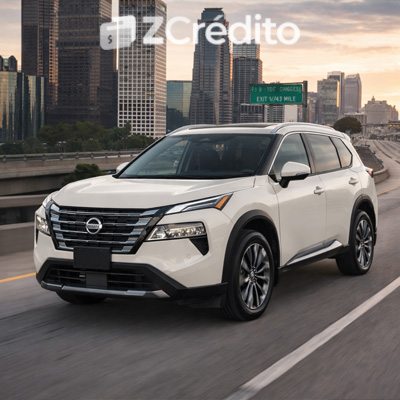
At the core of the 2025 Rogue is a 1.5-liter turbocharged inline‑three engine using variable compression technology.
This system dynamically adjusts compression ratios between efficiency-focused cruising and torque-demanding acceleration scenarios.
From an engineering perspective, this allows the Rogue to deliver higher torque output than many naturally aspirated competitors while consuming less fuel under steady driving conditions.
| Component | Data |
| Engine Code | KR15DDT |
| Displacement | 1,497 cc |
| Power Output | 201 hp @ 5,600 rpm |
| Torque Output | 225 lb‑ft @ 2,800 rpm |
| Compression Range | Variable (8:1 to 14:1) |
| Transmission | CVT with simulated shifts |
| Drivetrain | FWD / Intelligent AWD |

2025 Nissan Rogue Performance, Weight Distribution, and Dynamics 📊
The 2025 Rogue is engineered for stability rather than sport-oriented dynamics. Weight distribution and suspension tuning favor ride comfort and highway composure.
| Metric | Value |
| 0–60 mph | ~8.0 seconds |
| Top Speed (est.) | 124 mph |
| Towing Capacity | 1,500 lbs |
| Turning Radius | 18.2 ft |
| Curb Weight Range | 3,465 – 3,700 lbs |
Chassis, Suspension, and Brake System Breakdown 🛞
The 2025 Nissan Rogue uses a unibody construction with a front MacPherson strut suspension and a rear multi-link setup.
This configuration improves isolation over uneven surfaces and reduces cabin vibration.
Four-wheel disc brakes with electronic brake-force distribution and brake assist support consistent stopping performance under load.
2025 Nissan Rogue Fuel Consumption and Annual Fuel Cost Estimates ⛽
Fuel efficiency is a primary advantage of the 2025 Rogue. EPA ratings translate into measurable annual savings.
| Drivetrain | City | Highway | Combined |
| FWD | 30 mpg | 37 mpg | 33 mpg |
| AWD | 28 mpg | 35 mpg | 31 mpg |
Interior Dimensions, Cargo Utilization, and Practical Space 📐
The 2025 Nissan Rogue emphasizes interior efficiency rather than maximum footprint.
| Area | Measurement |
| Passenger Volume | 105.4 cu ft |
| Cargo (Seats Up) | 36.5 cu ft |
| Cargo (Seats Folded) | 74.1 cu ft |
| Rear Legroom | 38.5 inches |
Safety Systems, Sensors, and Insurance Impact 🛡️
Safety equipment on the Rogue directly affects insurance premiums and resale confidence. Nissan Safety Shield 360 is standard across all trims.
Active systems include collision mitigation, blind‑spot monitoring, lane intervention, and rear automatic braking.
Vehicles with comprehensive ADAS systems typically receive lower insurance risk scores, contributing to reduced premiums.
2025 Nissan Rogue Pricing Structure and Option Costs 💲
Pricing for the Rogue reflects incremental feature additions rather than mechanical upgrades.
| Trim | Base MSRP |
| Rogue S | $28,420 |
| Rogue SV | $29,900 |
| Rogue SL | $35,040 |
| Rogue Platinum | $38,420 |
Maintenance, Insurance, and Total Cost of Ownership 📈
From a financial standpoint, the 2025 Rogue performs well over a 5‑year ownership horizon.
| Cost Category | Estimated Cost |
| Maintenance & Repairs | $3,200 – $3,800 |
| Insurance | $7,500 – $8,500 |
| Fuel | $6,300 – $6,700 |
| Depreciation | $14,000 – $16,000 |
Learn how car financing 0 down can unlock vehicle access without upfront cash while still supporting smart financial planning.
Market Positioning of the 2025 Nissan Rogue in the Compact SUV Segment 🚘
The Rogue competes by offering above‑average efficiency, strong safety technology, and moderate pricing rather than maximum performance.
Its data profile appeals to buyers seeking stability, predictable costs, and long-term usability.
Rather than targeting enthusiasts, Nissan positions the Rogue as a low‑risk, balanced vehicle for daily transportation.
A Data-Centered Perspective on the 2025 Nissan Rogue 🚀
When evaluated through engineering metrics and ownership costs, the 2025 Rogue demonstrates a disciplined design philosophy.
Efficiency, safety integration, and manageable depreciation define its value proposition.
For buyers comparing compact SUVs with a long-term financial lens, the Rogue offers clarity, consistency, and dependable performance without unnecessary complexity.
FAQ ❓
- How efficient is the 2025 Nissan Rogue compared to rivals?
- It ranks among the most fuel-efficient gasoline compact SUVs in the U.S.
- Does the Rogue’s engine prioritize performance or efficiency?
- The engine is tuned primarily for efficiency and smooth torque delivery.
- What is the estimated 5-year cost of ownership?
- Total ownership costs typically fall within competitive compact SUV averages.
- Is AWD worth the extra cost?
- AWD improves traction but slightly increases fuel and purchase costs.
- Does strong safety equipment affect insurance?
- Advanced safety systems often reduce insurance risk ratings.
