
Electric Car Charging Companies in the USA: Infrastructure, Economics, and the Real EV Experience
Learn in detail how electric car charging companies operate in the U.S., compare networks beyond surface-level speed claims, and understand how infrastructure decisions shape real EV usability.
The expansion of electric vehicles across the United States is inseparable from the growth of electric car charging companies.
While automakers focus on range, battery efficiency, and performance, charging networks determine how those vehicles function in real life.
Looking for the best deals on EVs this year? Explore the top electric cars for sale USA and find models that match your budget and lifestyle.
Know How Electric Car Charging Companies Design and Scale Charging Networks 🇺🇸
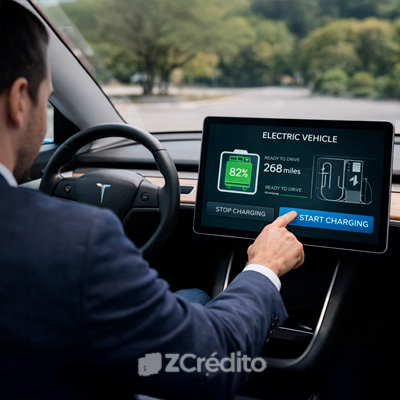
Electric car charging companies operate at the intersection of energy infrastructure, transportation, and digital services.
Network development involves site acquisition, utility coordination, hardware installation, software integration, and ongoing maintenance.
Companies must balance charger placement between dense urban areas, suburban corridors, and interstate routes.
This requires sophisticated planning models that consider traffic flow, grid capacity, dwell time, and long-term demand forecasts.
Discover the best electric cars under 60K available!

Why Electric Car Charging Companies Are Central to EV Adoption 💡
Consumer confidence in electric vehicles depends heavily on charging predictability.
Drivers are far more likely to transition to EVs when charging is easy to locate, consistently operational, and fairly priced.
Charging companies directly reduce range anxiety by expanding coverage and improving charger reliability.
Their investments shape public perception of EV practicality, especially for drivers without access to home charging.
Public Charging Networks Versus Home Charging Reality 🔌
Home charging remains the most convenient option for many EV owners, but it is not universally available.
Apartment residents, renters, and urban drivers depend on public charging infrastructure.
Charging companies fill this gap by deploying chargers in parking garages, retail centers, workplaces, and curbside locations.
Without these networks, EV adoption would remain limited to homeowners with private garages.
Charger Technologies Deployed by Electric Car Charging Companies ⚡
Charging companies deploy different charger types to support varied use cases and grid constraints.
- Level 2 chargers for long-duration parking and daily top-ups
- DC fast chargers for rapid energy replenishment during travel
- Ultra-fast chargers designed to minimize highway stop times
Each technology reflects a trade-off between cost, speed, and grid demand.
Compare Major Electric Car Charging Companies and Their Strategic Focus 🚗
The U.S. charging ecosystem includes several dominant networks, each with distinct priorities regarding location, speed, and user experience.
Comparative Overview of Leading Electric Car Charging Companies 📊
| Charging Company | Primary Strategy | Key Advantage |
| ChargePoint | Dense Level 2 coverage | Urban accessibility |
| Electrify America | Highway fast charging | Long-distance travel |
| EVgo | Urban fast charging | City commuters |
| Blink Charging | Mixed deployment | Regional flexibility |
Understanding these strategies helps drivers select networks aligned with their driving patterns.
Pricing Economics Used by Electric Car Charging Companies 💰
Pricing models vary significantly among charging companies, reflecting differences in electricity costs, infrastructure investment, and utilization rates.
Some networks charge per kilowatt-hour, others per minute, and some apply flat session fees.
Fast charging typically carries a premium due to higher equipment costs and grid demand, while slower charging offers lower rates but longer dwell times.
Ready to go green? Discover how auto financing pre qualify can help you drive an electric or hybrid car, with approvals that fit your budget.
Membership Models and Cost Predictability 🔑
Many charging companies offer subscription programs designed to reduce price volatility for frequent users.
Memberships often provide discounted charging rates, and access to preferred locations, making them appealing for drivers who rely heavily on public charging rather than home setups.
Reliability, Uptime, and Maintenance as Competitive Factors 🛠️
Reliability remains one of the most critical differentiators among charging networks. Non-functional chargers erode user trust and undermine EV confidence.
Leading charging companies invest in remote diagnostics, predictive maintenance, and rapid repair response teams.
Uptime performance increasingly influences user preference more than advertised charging speed alone.
Read How Electric Car Charging Companies Enable Interstate and Long-Distance Travel 🧭
Long-distance EV travel depends on strategically placed fast chargers along major highways. Charging companies design corridors that minimize detours and reduce charging downtime.
These networks transform EVs from city-focused vehicles into viable options for cross-state travel, directly challenging one of the most persistent barriers to EV adoption.
The Strategic Future of Electric Car Charging Companies in the U.S. 🏁
Electric car charging companies are evolving into essential infrastructure providers rather than optional service operators.
Their role increasingly resembles that of utilities, supporting national transportation goals and emissions reduction targets.
As networks expand and technology improves, charging companies will determine how seamlessly EVs integrate into everyday American life.
FAQ ❓
- Do charging companies cover rural areas in the U.S.?
- Coverage is expanding, but rural density remains lower than urban regions.
- Coverage is expanding, but rural density remains lower than urban regions.
- Are all charging companies compatible with every EV?
- Most support standard connectors, though compatibility can vary by vehicle.
- Most support standard connectors, though compatibility can vary by vehicle.
- Why does fast charging cost more than Level 2 charging?
- Higher equipment costs and grid demand increase fast-charging prices.
- Higher equipment costs and grid demand increase fast-charging prices.
- Can drivers rely solely on public charging networks?
- Yes, though it requires planning and access to reliable networks.
- Yes, though it requires planning and access to reliable networks.
- Will charging networks continue expanding nationwide?
- Yes, expansion is driven by EV growth and public-private investment.
